
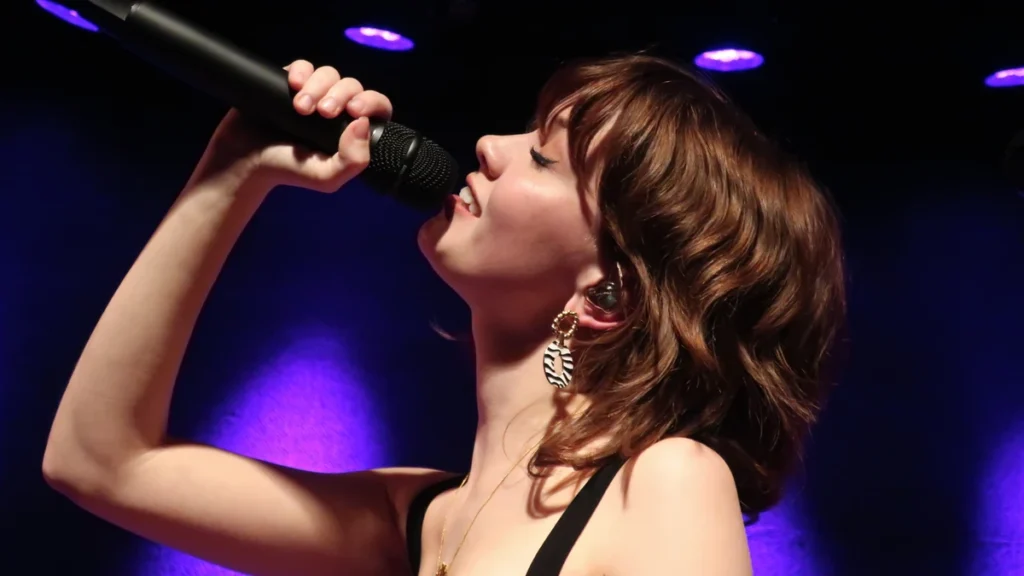
Maisie Peters Left an Arena Tour and Wrote Sixty Songs
Maisie Peters was booked to support Kelsea Ballerini across North American arenas. She pulled out, and then wrote around sixty songs.
Florescence came out on 22 May through Gingerbread Man and Atlantic, running forty-eight minutes and fifty-one seconds and recorded across 2023 to 2025. It is her third album and her first to move out of pop.
Turning Down the Arenas
The reasons she gave were two, and she gave them plainly: prioritising her mental health, and wanting to complete the third album to the best of her ability.
Withdrawing from a major support slot is expensive in a way that is easy to underestimate. An arena run in front of somebody else’s audience is the most efficient way to grow one, and turning it down means giving up months of exposure that cannot be bought back later.
Saying so publicly is a further step. The standard language for a cancellation is vague — scheduling, unforeseen circumstances — precisely because a stated reason invites scrutiny.
What the decision bought was time, and the number attached to it is startling. Peters has estimated writing at least sixty songs for the album during that break.
Sixty songs for a forty-nine-minute record means the overwhelming majority were discarded. That ratio is what a songwriter buys with a cancelled tour, and it is the practical argument for having made the trade.
The Eras Tour and What Followed
The context she was working out of is in the lyrics. The album’s subjects include the viral hate she received after opening for Taylor Swift’s Eras Tour at Wembley Stadium in August 2024.
Opening for the largest tour in history is the kind of opportunity an artist cannot refuse and cannot control. The audience is enormous, almost none of it is yours, and the response is measured publicly and immediately.
Writing about that afterwards is a more interesting choice than absorbing it quietly. It also connects directly to the withdrawal from the Ballerini dates — an artist who has just experienced the downside of a very large support slot has good information when deciding whether to take another.
The rest of the lyrical material is more conventional in shape and unusual in tone: requited love rather than longing, former relationships looked back on without nostalgia, insecurity, and being protective of a partner. Our piece on what happens to a pop artist between albums covers the pressures acting on a gap like this one.
From Pop to Folk and Country
Musically the record leaves the territory that made her. The Good Witch in 2023 was predominantly pop and became her first UK number one, making her the youngest solo British female artist to top the chart in almost a decade — since Ella Henderson in 2014 — and winning her the inaugural Rolling Stone UK Breakthrough Award.
Florescence is folk-pop and country pop. Following a chart-topping pop album by changing genre is the standard high-risk move, and the reception suggests it worked: critics praised both the shift and the songwriting.
The producer list explains how the change was executed. Thirteen names appear, including Ian Fitchuk, Jez Ashurst, Michael Pollack, Joe Rubel, Matias Tellez, Alysa Vanderheym and Peters herself — a spread wide enough to cover both the pop craft she came from and the acoustic idiom she was moving into.
It is also her first album with featured artists, including Marcus Mumford, and a collaboration with Julia Michaels on the single “Kingmaker”. For a songwriter who had made two albums alone, opening the record to other voices is part of the same widening.
Mumford in particular is a legible signal rather than a random name. He is one of the few British artists to have taken folk instrumentation into arenas, and inviting him onto a folk-pop record made by someone who has just played Wembley is a statement about which tradition she is joining.
The recording window explains how a change this large was possible. Sessions ran from 2023 to 2025 — beginning while The Good Witch was still current and continuing through the tour cancellation — which means the material had years to move rather than being written to a brief.
A genre change made over three years is a different thing from one made in a six-week block. The first is a drift the artist notices afterwards; the second is a decision imposed on a deadline, and it usually sounds like one.
A Podcast, a Double A-Side and Three Small Rooms
The campaign was built out of unusual pieces. In May 2025 Peters launched a podcast, Twinhood, with her twin sister Ellen, and began teasing new music on it — eventually announcing the single “Audrey Hepburn” in an episode.
That song arrived on 9 October 2025 alongside a surprise double A-side, “You You You”. The two are sonically and lyrically very different, and she released them together deliberately, wanting listeners to encounter both at once.
They were promoted with Before the Bloom — three intimate shows, two in London and one in New York. For an artist who had just declined an arena tour, a three-date run in small rooms is a consistent choice rather than a modest one.
“Say My Name in Your Sleep” followed on 19 November, performed on BBC Radio 1’s Live Lounge in December. “My Regards” came on 6 February and “Kingmaker” on 21 April, a month before release.
An Album Announced With a Costume Joke
The album was announced on 28 January 2026 through a trailer directed by Amelia Dimoldenberg, starring Peters alongside the actor Georgia Groome.
Groome appeared in an olive costume, an homage to one of her scenes in the 2006 film Angus, Thongs and Perfect Snogging, with Peters in a daisy costume.
That is a very specific reference for a very specific audience. British listeners of roughly Peters’ generation grew up with that film, and building an album announcement around a twenty-year-old teen comedy is a way of signalling who the record is for without saying it.
It also sits oddly and effectively beside the album’s actual content. A trailer built on a costume gag introducing a record about viral abuse, insecurity and requited love is a mismatch that reads as deliberate.
The tour that followed included a headline show at the O2 Arena in London — the arena she reached by turning one down.
That is the closing argument for the whole decision. Supporting somebody else’s arena tour puts you in front of twenty thousand people who came for another artist; headlining the O2 puts you in front of twenty thousand who came for you, and the second is what an album is for.
The five singles across seven months served the same end. Rather than one lead track carrying the campaign, the record was introduced in instalments, each with its own audience and its own chance to convert somebody who missed the last.
Whether sixty songs was the right number to write is unknowable from outside. What the album shows is an artist who decided the record mattered more than the exposure, at the exact point in a career where that is hardest to choose.
Florescence is out now on Gingerbread Man and Atlantic.
About The Author
