
Phones Are Not Invited to Phoebe Bridgers’ Lost Tour
The first prop at a Phoebe Bridgers show this autumn is a small fabric pouch. At Gainbridge Fieldhouse in Indianapolis, fans scanned their mobile tickets, sealed their phones inside Yondr pouches with magnetic locks, and got them back only when staff unlocked the pouches outside the arena after the show, according to USA Today.
That pouch is the whole presentation in miniature. Bridgers opened the Lost Tour, her first headlining arena tour, on 14 September, and it continues a release campaign for her album Lost Weekend that has been staged, almost from the start, away from screens.
An Arena Tour Built Without Screens
The scale is new for her. The tour runs to 45 dates across North America, the UK and Europe until 12 December, ClutchPoints reports, starting with two nights in Indianapolis. Her previous solo tour, the Reunion Tour for Punisher, ran to 106 dates between September 2021 and April 2023.
The phone rule is not unique to Phoebe Bridgers. USA Today notes that Jack White, Alicia Keys and Bruno Mars have also used Yondr pouches to stop phone use at their shows. What stands out here is the size of the rooms, and how consistently the rule has been applied across one album cycle.
The effect was quieter than a manifesto. The USA Today reviewer had expected grand revelations about togetherness and instead found something simpler: a very good show, a darker arena without the usual glow of screens, and a crowd that sang, swayed and hugged with more abandon. Bridgers said little from the stage, but thanked fans for a great start to the tour and for agreeing to put their phones away.
A Dome, Two Stages and a Lot of Lasers
Without phone lights, the stage does the lighting. The main stage is stretched out and built around a giant, UFO-like dome that doubles as a screen when it is lifted and turned, with a smaller B stage for the more intimate moments, USA Today reports. Laser effects carry the outer space theme that has run through the whole album cycle, and a flashing rainbow sequence punctuated the title song, Lost Weekend. There is a strobe warning.
The arrangements change with the room. A large band pushed Bobby and Lost Boys out to arena size, while quieter songs such as Graceland Too and Still Standing were played with a string quartet, or by Bridgers alone on guitar or keyboard. The set lasted about 90 minutes.
No screens also meant no setlist-checking. The reviewer noted that without phones nobody in the arena could follow along on a setlist site, so songs landed as surprises, and the cheer for Georgia was bigger for it.
Twenty-Three Songs, Eleven of Them New
The opening night ran to 23 songs, according to ClutchPoints, citing setlist records. Eleven came from Lost Weekend, including its only single, Lost Boys, alongside Bobby, The Governor’s Waltz, Still Standing and I Can’t Wait.
The older material was chosen carefully. Motion Sickness opened the show, and Garden Song, Moon Song, Funeral, Georgia, Kyoto and I Know the End all appeared. The encore brought Lost Weekend (Reprise) and Scott Street, before the band closed alone with Never Going Back!
The set was longer than her phone-free show in New York earlier this year. ClutchPoints notes that Bridgers played 16 songs at Madison Square Garden on 4 June, again with every phone locked away.
A Campaign That Happened Offline
The tour is the end of a long, deliberately physical rollout. Before Lost Weekend was even announced, Bridgers played a run of pop-up shows in small towns and middle American cities, including Roswell, New Mexico, advertised with flyers, Variety reports. Almost every pre-release event banned phones.
She explained the thinking at a fan Q&A. Bridgers said she wanted everything about the album to feel as if it were happening in real life, because she had never lived through a time when she did not find out about things on the internet, and joked that her biggest lesson from the pop-ups was that the internet is not real.
The wait for the record was part of the story too. Bridgers told fans she kept booking studio time and then putting it off, going in to work and then taking six months away, so the album took a long time to finish. The single that broke the silence, Lost Boys, arrived on 25 June, ClutchPoints reports, and Variety described it as her first solo single in four years, with a video that has her role-playing at a Renaissance fair.
The campaign also left out the usual press cycle. Variety noted that she had not given a single interview about Lost Weekend, which made a short fan Q&A the main place she discussed it.
Planetariums and a Roller Rink
The album premiere took the space theme literally. Lost Weekend was first played to the public in planetariums in 25 North American cities and nine overseas, with either a laser show designed by Laser Fantasy or a night-sky film by the photographer Babak Tafreshi, shot in nearly 20 countries without computer-generated imagery, according to Variety. Spotify produced the shows with Phoebe Bridgers and her label, Dead Oceans, and phones and smart watches went into Yondr pouches so the album could not leak. Midnight listening parties followed in more than 300 cities.
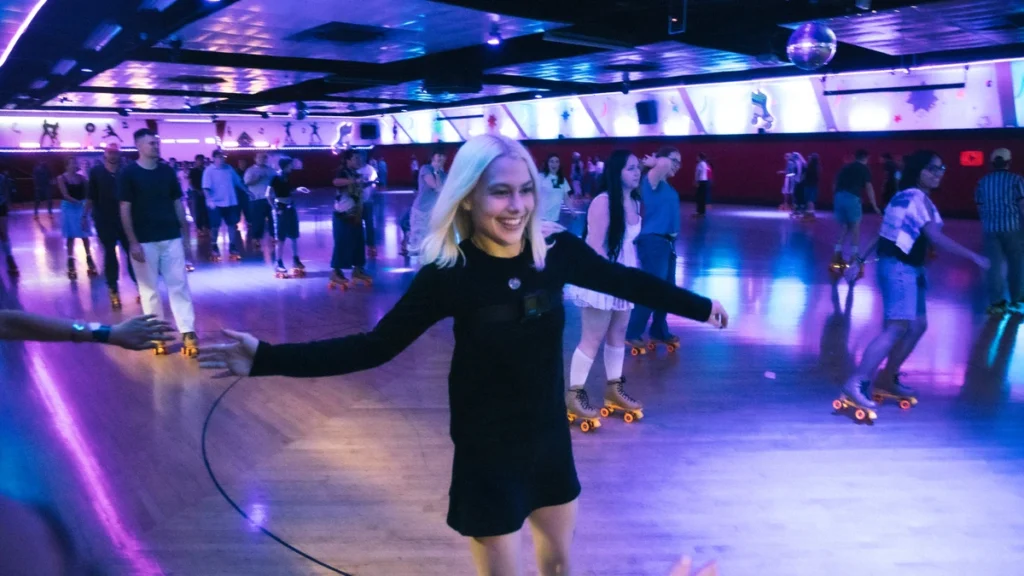
Then came the roller rink. At a YouTube-sponsored party at the Moonlight Rollerway in Glendale, California, Bridgers spent around ten minutes skating with a couple of hundred fans, the only skater in light-up skates, Variety reports. She told the crowd she had long wanted to skate to sad, slow songs rather than the usual upbeat soundtrack.
The references were cinematic. Asked what inspired the record, she pointed to The Lost Weekend, the 1945 Billy Wilder drama about an alcoholic in a fugue state, and to The Lemon of Pink, the 2003 album by the Books. She also premiered a rough cut of the video for I Can’t Wait, which was set to include drone footage shot at the party.
What the Record Is Doing
The staging matches the sound. Lost Weekend, released on 14 August through Dead Oceans, is Bridgers’ third solo album and her first since Punisher in 2020. In its review, The Guardian describes an Americana-leaning singer-songwriter record whose acoustic guitars, mandolins and violin keep getting swallowed by droning electronics, feedback and eerie wordless vocals, and highlights the separate credits for sound design. The opening song, The Outside, smothers her voice in a vocoder, the title track breaks into chattering euphoria, and Panorama buries a melody and a banjo figure under murk.
The years away were busy ones. The Guardian recalls that Boygenius, her band with Lucy Dacus and Julien Baker, won three Grammys for The Record, that Bridgers left the 2024 ceremony as the night’s biggest winner, and that she sang on Taylor Swift’s re-recorded Red and supported the Eras Tour.
The cast is familiar and starry. The Guardian lists Jack Antonoff, her Boygenius bandmates, Jon Brion, Alex G and Conor Oberst among the contributors, and hears grief after the death of her father running through the songs. Its verdict was that the album is a thrilling, daring study in dislocation.
That is the link between image and record. An album about feeling outside your own life is being presented in rooms where nobody can watch it through a screen. AltPop.News looked at another act rethinking the live show recently, when Beach House started building a smaller live show they can fly. Phoebe Bridgers went the other way: bigger rooms, bigger lasers, and nothing in anyone’s hands.
About The Author
