
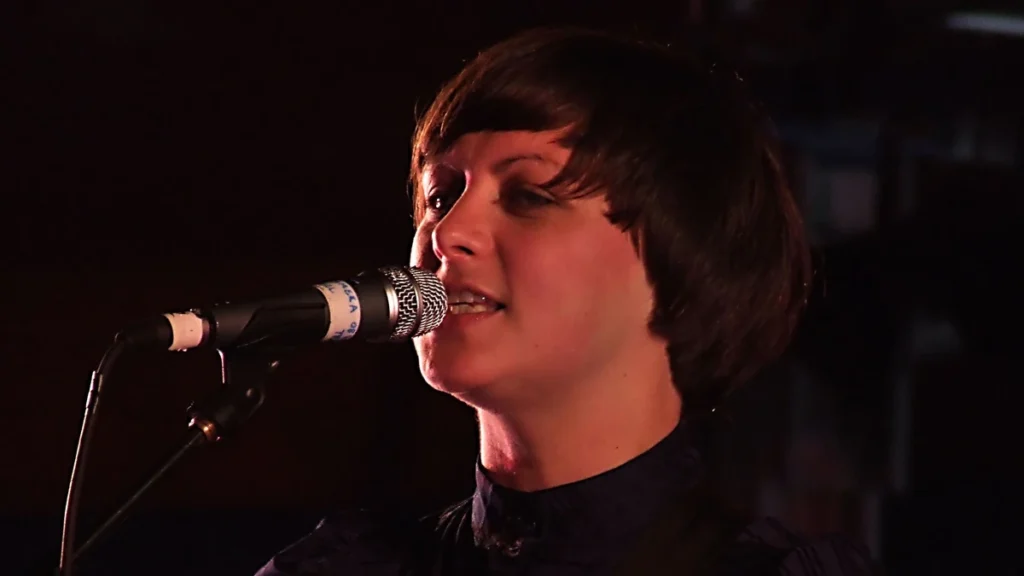
Camera Obscura Took Eleven Years to Make Their Sixth Album
Three studios in three very different places. Rockfield in Monmouthshire, the Welsh farm where a great deal of British rock has been made since the 1960s. Chem19 in Glasgow, the band’s home city. And Clashnarrow in Helmsdale, a village on the Sutherland coast about as far north as a recording studio gets on the British mainland.
For a record called Look to the East, Look to the West, that is a title being taken literally. Camera Obscura’s sixth album arrived on 3 May 2024 through Merge Records, eleven years after their fifth, and the way it was made is inseparable from why it took so long.
What the Gap Was
The band formed in Glasgow in 1996 around Tracyanne Campbell, John Henderson and Gavin Dunbar, and spent two decades as one of the defining acts of Scottish twee pop, working through Biggest Bluest Hi Fi in 2001, Underachievers Please Try Harder in 2003, Let’s Get Out of This Country in 2006, My Maudlin Career in 2009 and Desire Lines in 2013.
Carey Lander joined on keyboards in 2002 and died in October 2015. The band stopped. There was no announcement of a split and no farewell tour, just a hiatus that ran to 2018 and then a slow reconvening: shows in 2019, including Glasgow warm-ups, and Donna Maciocia joining as a touring keyboardist before becoming a permanent member in 2023.
An eleven-year gap is usually a story about a band losing interest or falling out. This one is not, and the distinction matters to how the album sounds. Nothing about the record is a reinvention or an apology for the absence.
The Producer They Already Knew
Jari Haapalainen produced it, which is a return rather than a hire. He made Let’s Get Out of This Country and My Maudlin Career, the two records most people mean when they talk about this band, so bringing him back is a decision about continuity at exactly the moment continuity was in question.
He also plays on it, credited with programming and percussion alongside production and mixing. The rest of the personnel is the current five-piece plus engineers Jake Hutton, Joe Jones and Paul Savage, with Anne McLeod adding oboe to the closing title track. An oboe on the last song of a comeback album is the kind of small, unhurried decision a band makes when nobody is waiting on a deadline.
Three Rooms, Three Sounds
Recording across Rockfield, Chem19 and Clashnarrow is unusual for a band this size, and expensive in a way that is hard to justify on paper. What it buys is variety of room sound, because a song cut in a Welsh farm complex does not sit in the same acoustic space as one cut in Glasgow or in a converted building on the Sutherland coast.
Most modern records go the other way, tracked in one room and then given their apparent variety by plug-ins. Choosing three real locations means accepting that the album will not sound uniform, and building the sequence around that rather than against it. On a record whose title points in two directions at once, non-uniformity is the argument.
The Titles Do the Work
Look at the run of album titles across this catalogue: Underachievers Please Try Harder, Let’s Get Out of This Country, My Maudlin Career, Desire Lines. Self-deprecating, wry, faintly geographic, and all in the same voice. The song titles on the new album continue it exactly: Liberty Print, We’re Going to Make It in a Man’s World, Big Love, Only a Dream, The Light Nights, Sleepwalking, Baby Huey (Hard Times), Sugar Almond, Denon, Pop Goes Pop.
Naming a song after a Japanese audio brand and another after a sweet, then putting them next to a track called We’re Going to Make It in a Man’s World, is a specific kind of presentation. It refuses the earnestness that a record made under these circumstances would be expected to carry, and it is the clearest continuity between the band that stopped in 2015 and the one that came back.
Faith in the Present
Campbell’s one public line about the lead single is characteristically economical. Of Big Love she said it is “a song about not looking back, having faith in the present and future”.
That is a useful frame for the whole album, and it explains what is absent from it. There is no track that functions as a memorial, no interlude of significance, none of the architecture a band normally builds when returning from a loss. The record simply proceeds, which is a harder and more considered choice than the alternative.
How It Landed
Metacritic settled at 84, which is universal acclaim by that scale. Pitchfork gave it 8.0. AllMusic gave four stars. Uncut scored it 8 out of 10 and made the observation that matters most, saying it “could have followed right on the heels of 2013’s Desire Lines” and that Campbell “still writes exquisite songs”.
That is the highest compliment available to a record like this. The worry with any long-delayed album is that the intervening years will be audible as either rust or overcompensation. Reviewers heard neither.
Commercially it behaved like what it is: a beloved independent act with a deep home audience. Number four on the Scottish Albums Chart, number four on the UK Independent Albums chart, number thirty-six on the main UK chart. The gap between the independent placing and the overall one is the ordinary shape for a Merge release, and holding the top five of the Scottish chart is the figure that describes the band’s actual standing.
Twee Pop as a Working Method
Camera Obscura have been compared to Belle and Sebastian since the beginning, largely because both came out of Glasgow with a fondness for strings, plain melody and lyrics that make jokes at their own expense. The comparison undersells what the label describes. Twee pop is usually treated as a matter of tone, but as practised here it is closer to a set of production rules: keep the vocal conversational, let the arrangement carry the emotion the singing declines to, and never oversell a line.
Those rules are why the band could stop for eleven years and restart without needing to update anything. A style built on restraint does not date the way a style built on a production trend does, because there is no trend in it to expire.
It also explains the band’s durability in a period that has been unkind to acts of their scale. Guitar groups who leaned on a particular decade’s production sound have generally had to choose between repeating it and abandoning it. Camera Obscura never had that problem, because what identifies them is a writing habit and a singing voice rather than a set of studio decisions, and neither of those has an expiry date attached.
Nobody Set a Date
The most instructive thing about this album is the thing it did not do. There was no announcement of a comeback, no anniversary tour to bridge the gap, no staged return. The band played some shows, added a member, went to three studios and delivered a record when it existed.
That is the same refusal of the industry clock that runs through mxmtoon insisting on a finished album before anyone set a release date, arrived at from opposite ends of a career. One artist is protecting a first decade; the other has three. In both cases the result is a record that sounds like it was finished rather than delivered, which is audible, and which the eleven years bought.
About The Author
