
The Look of Afrikaans Darkwave on Waar Ons Begin, with Stephanus Skadulig on a Station Escalator
The Look of Afrikaans Darkwave on Waar Ons Begin, with Stephanus Skadulig on a Station Escalator
An Independent South African Artist Follows His Album SKADULIG with 13 New Songs in Afrikaans
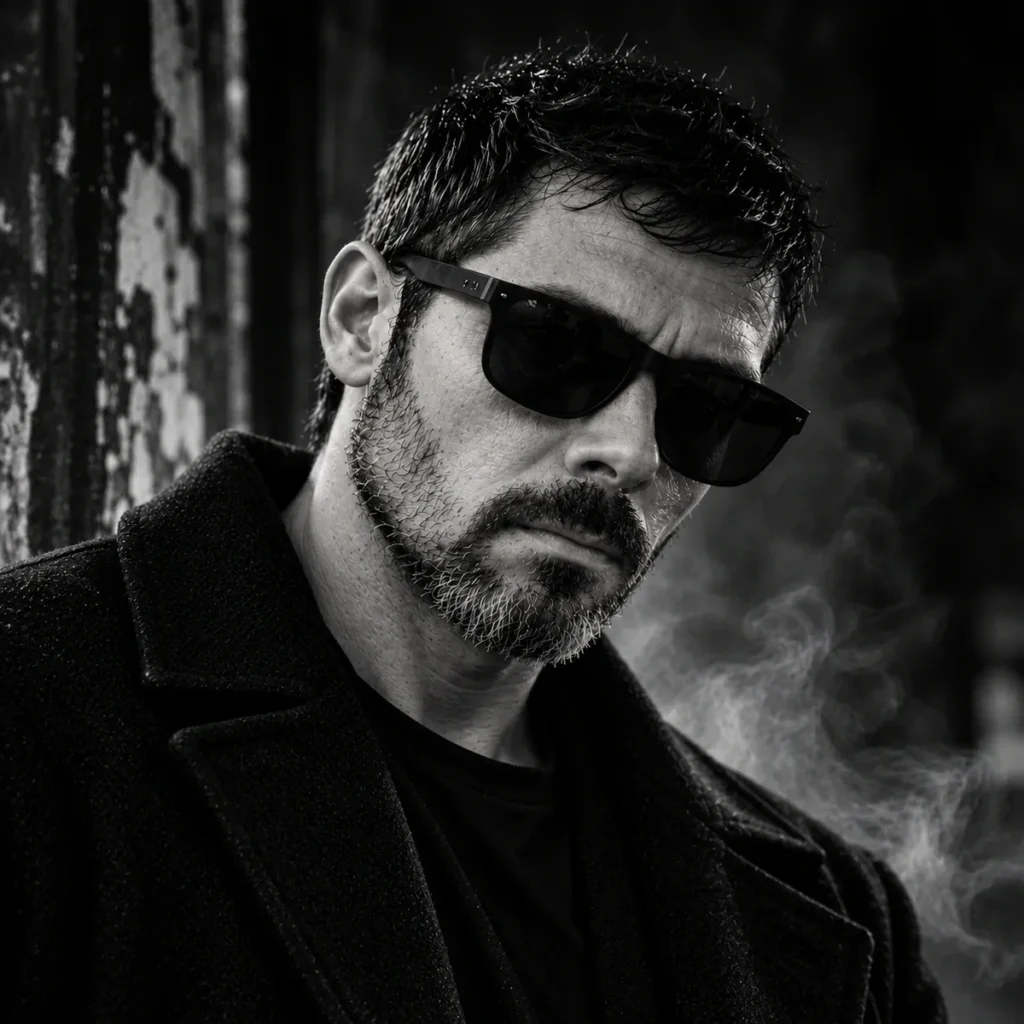
On the cover of Waar Ons Begin, Stephanus Skadulig stands on a long escalator in a tiled station tunnel, glancing back over his shoulder. The title is Afrikaans for “Where We Begin”. The album sets brooding darkwave and alternative rock to Afrikaans words, with AngelQ on three of its songs, and it has been out since 18 October 2026. It opens with Solank Ek Aanhou Beweeg, “As Long As I Keep Moving”, and closes with Ek Glo Nog, “I Still Believe”.
Stephanus Skadulig’s music sits in our Alt-Pop, Alternative Pop, Dark Pop playlist below. Waar Ons Begin reached this desk through PopHits.Co Music Charts, which verifies independent artists and places their releases across its network of music news desks. Press play, then read on for where Afrikaans rock came from and where this album takes it.


Voëlvry Made Afrikaans a Rock Language in 1989, and Waar Ons Begin by Stephanus Skadulig Turns It Inward
Rock in Afrikaans has a history, and it starts with rebellion. Voëlvry, the movement of anti-apartheid rock sung in Afrikaans, is said to have started on 4 April 1989 in a packed Johannesburg club. Johannes Kerkorrel, Koos Kombuis and Bernoldus Niemand were among its leading names. Kerkorrel’s argument was simple. Once a language can carry rock and roll, it can no longer belong only to the people who used it to oppress.
Voëlvry pointed Afrikaans rock outwards, at the state and the culture around it. Waar Ons Begin points the same language inwards. Its subjects are identity, relationships, struggle, darkness, resilience and hope. The titles move through them like stages of one long night: Wat Ek Saamdra (“What I Carry With Me”), Wat Is Liefde (“What Is Love”), Môre Sal Weer Lig (“Tomorrow Will Be Light Again”) and Ek Sal Bly (“I Will Stay”). Faith runs through it too, from Wie glo jy? (“Who Do You Believe?”) onwards.
Darkwave suits that kind of record. The style came out of the colder end of post-punk and new wave in the late 1970s and 1980s. It trades in mood more than spectacle, and these titles are about holding on rather than breaking free.

Where Stephanus Skadulig Fits, Between Shadow and Light in His Own Name
So who is holding on? Stephanus Skadulig is an independent artist from Lichtenburg, South Africa, who writes in Afrikaans and English. By his own account, his songs come from the darker places of life. He moves between darkwave, alternative rock, metal and gothic styles, depending on the story a project tells. Read as Afrikaans, the second half of his name holds two words, skadu for shadow and lig for light, and his own pages invite listeners into both.
That name was also the title of his album SKADULIG, released on 17 September 2026. Waar Ons Begin followed on 18 October, 31 days later. It is a full album in its own right, a little over an hour long, with most tracks running close to five minutes. AngelQ, also featured on two songs of SKADULIG, returns late in the running order, on Ons Kies Vandag (“We Choose Today”), As Jy My Nog Ken (“If You Still Know Me”) and Ek Het Jou Nie Verbygescroll Nie.
That last title deserves a second look. Verbygescroll bends the English verb “scroll” into Afrikaans grammar, so the song is called “I Didn’t Scroll Past You”. It is a phone-age line written in the language of Voëlvry.
The opening track shows how he works. Skadulig, credited as Andries Johannes Stephanus van der Lith, wrote its words and music with generative AI, which also made the audio, then produced the track and sang it. His TikTok profile describes him as a proud AI artist.


Why Fokofpolisiekar and Rammstein Are the Nearest Neighbours of Waar Ons Begin by Stephanus Skadulig
Writing in Afrikaans puts Waar Ons Begin close to two very different bands. Fokofpolisiekar formed in Bellville, near Cape Town, in April 2003 and performed entirely in Afrikaans. One of their songs became the first Afrikaans track officially playlisted on the national station 5FM. Their debut album, Lugsteuring, followed in 2004. Skadulig works a darker end of the same language, and Fokofpolisiekar had already shown that an Afrikaans rock song can reach young listeners without a translation.
Rammstein make a similar case from further away. The band formed in Berlin in 1994, and nearly all of its songs are in German. Its second album, Sehnsucht, brought international success in 1997, and in February 1999 the band was nominated for Best Metal Performance at the 41st Annual Grammy Awards. Heavy, dark music in a language other than English reached that stage. Waar Ons Begin, with all 13 of its titles in Afrikaans, takes the same chance.
The album suits listeners who come to darkwave and alternative rock for mood. It also suits Afrikaans speakers who want darker songs in their own language. Listeners without Afrikaans have a way in too, because the titles alone sketch the arc. Start with the opener, play the three songs with AngelQ together, then finish on Ek Glo Nog. By then the man on the escalator has answered his own title: this is where he begins, and he is still moving.
From the AltPop.News curator team: “We added Solank Ek Aanhou Beweeg to our Alt-Pop, Alternative Pop, Dark Pop playlist because, at just over three minutes, it is the shortest song on Waar Ons Begin and the quickest way into an album built from long songs.”
Stream Waar Ons Begin and Follow Stephanus Skadulig on Spotify, YouTube, Instagram, Facebook and TikTok
Stream Waar Ons Begin and the rest of the catalogue on Spotify, and watch Stephanus Skadulig on YouTube. Then follow him on Instagram, Facebook and TikTok, and join his WhatsApp channel for news of the next release.





About The Author
